Intro to conjoint analysis Featured
Learn about conjoint analysis (DCE) and how it reveals people’s preferences, some terminology and how 1000minds is used, with examples and practical insights.
Watch our free, step-by step video tutorials to help you quickly get started with 1000minds.
Learn about conjoint analysis (DCE) and how it reveals people’s preferences, some terminology and how 1000minds is used, with examples and practical insights.

Learn how to simulate people's choices in response to modifications of your alternatives.

Learn how to get started with 1000minds conjoint analysis, by setting up and configuring your preferences survey.

Learn how to add and edit attributes in 1000minds’ conjoint analysis surveys, and how to make attributes optional or self-explicated for participants if desired.

Learn how to manually add and edit alternatives, and customize them with pictures and descriptions for your conjoint analysis survey.

Learn how to import alternatives into 1000minds from an Excel file, so you can get started quickly using an existing list of alternatives.

Learn how to customize the introduction and completion pages of your 1000minds survey.

Learn how to customize the trade-offs page in a 1000minds preferences survey (DCE), including editing text, titles, buttons and labels and controlling features.

Learn how to add customizable questions to a 1000minds survey – additional to trade-off questions – including multi-choice, text, numeric and other formats.

Learn how to customize and group optional attributes in 1000minds so each participant gets to choose their own attributes for their preferences survey (DCE).

Learn how to set up your 1000minds survey to receive participants from a survey panel provider.
Learn how to preview your 1000minds survey to ensure that everything is in place and the survey runs seamlessly.

Learn about best practices for publishing 1000minds surveys, managing access and closing responses by time or response count, with clear, practical guidance.

Learn how to monitor participant progress in your survey, how people performed on the exclusion rules, and how long people took to complete your survey.
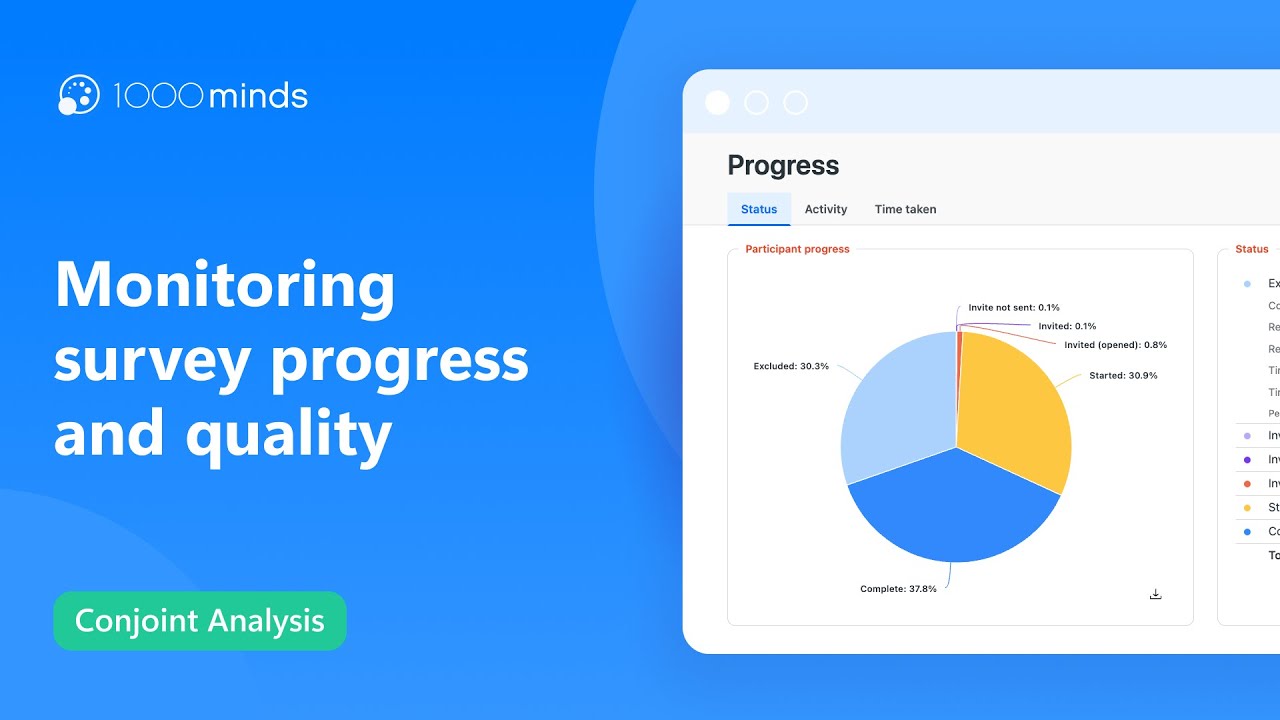
Learn how to improve the quality of your survey data by excluding responses that fail selected quality assurance tests.

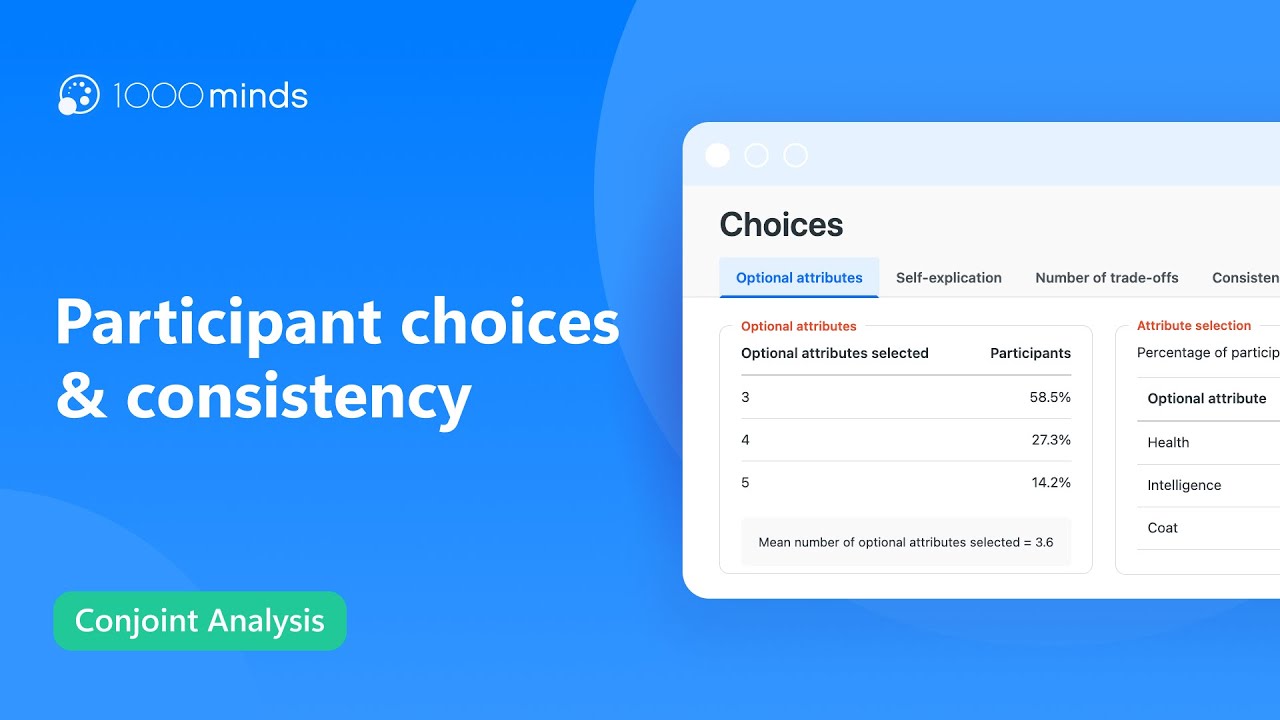
Learn how to review participants’ choices in 1000minds’ surveys, including optional attributes, trade-offs and response consistency, for more reliable results.
Learn how to understand the utilities of your attributes through the various graphs and charts on the 1000minds utilities page.

Learn how to analyze survey participants’ rankings of alternatives in 1000minds, and how to compare participants’ preferences and alternatives’ market shares.

Can’t find what you’re looking for? Contact us.
